![{[setting('site_name')]}](https://www.projxnews.com/uploads/setting/16983847711140531930.webp)
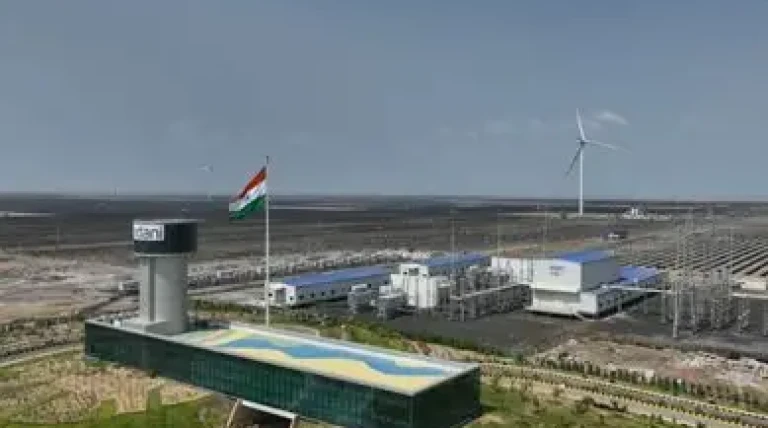

Adani Green Energy Ltd (AGEL) plans to commission a 14 GWh battery energy storage system (BESS) at its Khavda Renewable Energy Park in Gujarat by the end of the current financial year, marking a significant step toward strengthening grid reliability and reducing renewable energy curtailment.
The company has already operationalised 3.37 GWh of battery storage capacity at the site and aims to scale up the facility to 50 GWh over the next five years, creating one of the largest energy storage ecosystems in the world.
Khavda is being developed as a massive integrated clean energy hub with a planned renewable energy generation capacity of 30 GW. The addition of large-scale battery storage is expected to enhance the park’s ability to store excess renewable power and supply electricity during periods of high demand or low generation.
According to Rajat Seksaria, CEO of Battery Energy Storage and Green Hydrogen at Adani Group, the project will combine utility-scale renewable generation with extensive storage infrastructure at a single location. Once the planned 14 GWh system is fully operational, Khavda will become one of the world’s largest renewable energy and battery storage complexes.
The expansion comes as energy storage assumes a growing role in India’s power sector. With renewable energy capacity increasing rapidly, battery storage is becoming essential for managing intermittency, improving grid stability and minimizing the loss of clean energy due to transmission and storage constraints.
By integrating large-scale storage with renewable generation, the Khavda project is expected to improve the utilization of clean power, support round-the-clock renewable energy supply and contribute to India’s broader energy transition goals. The development also highlights the increasing importance of battery storage infrastructure in enabling higher penetration of renewable energy across the national grid.
News by Rahul Yelligetti.